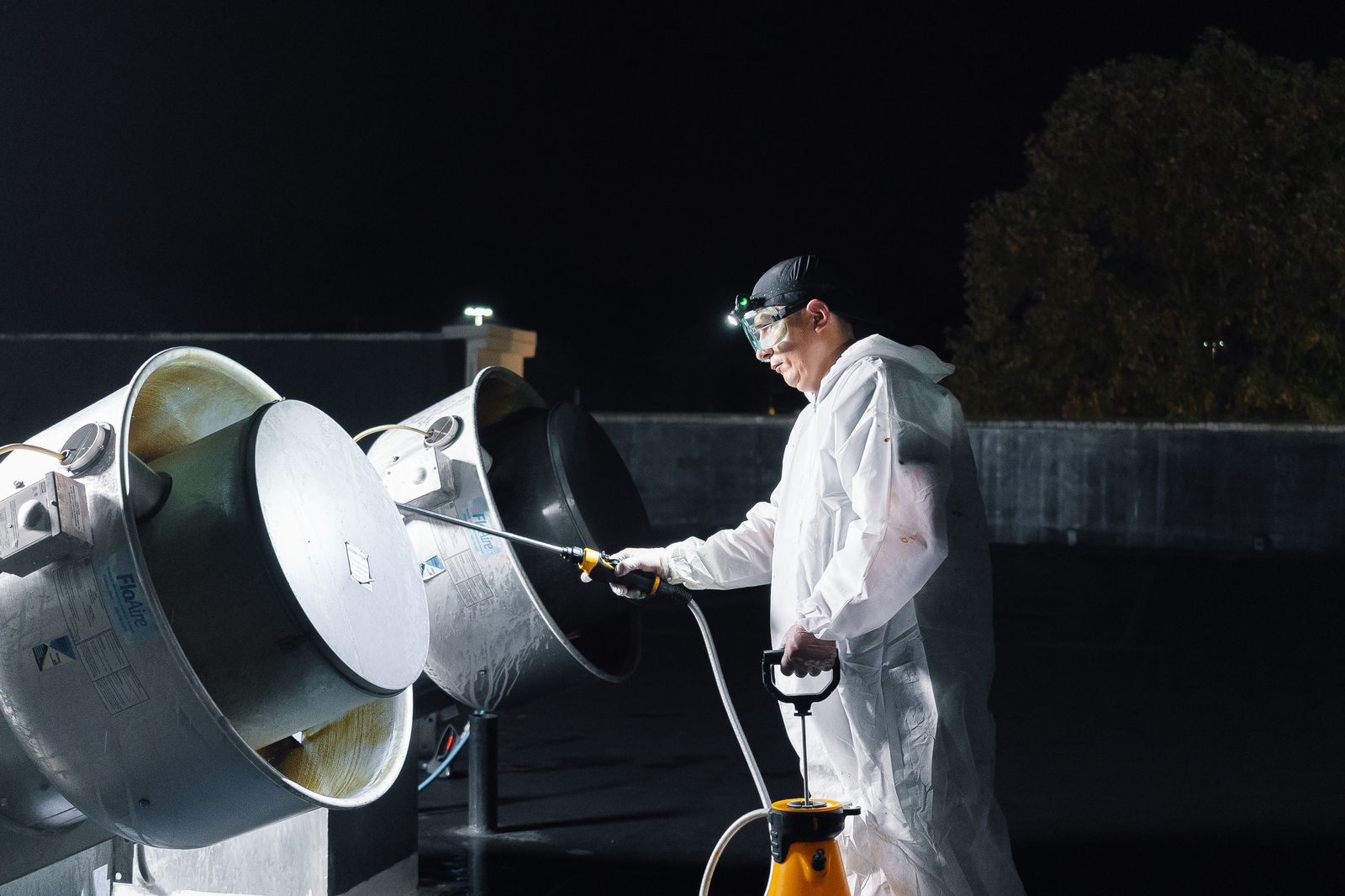
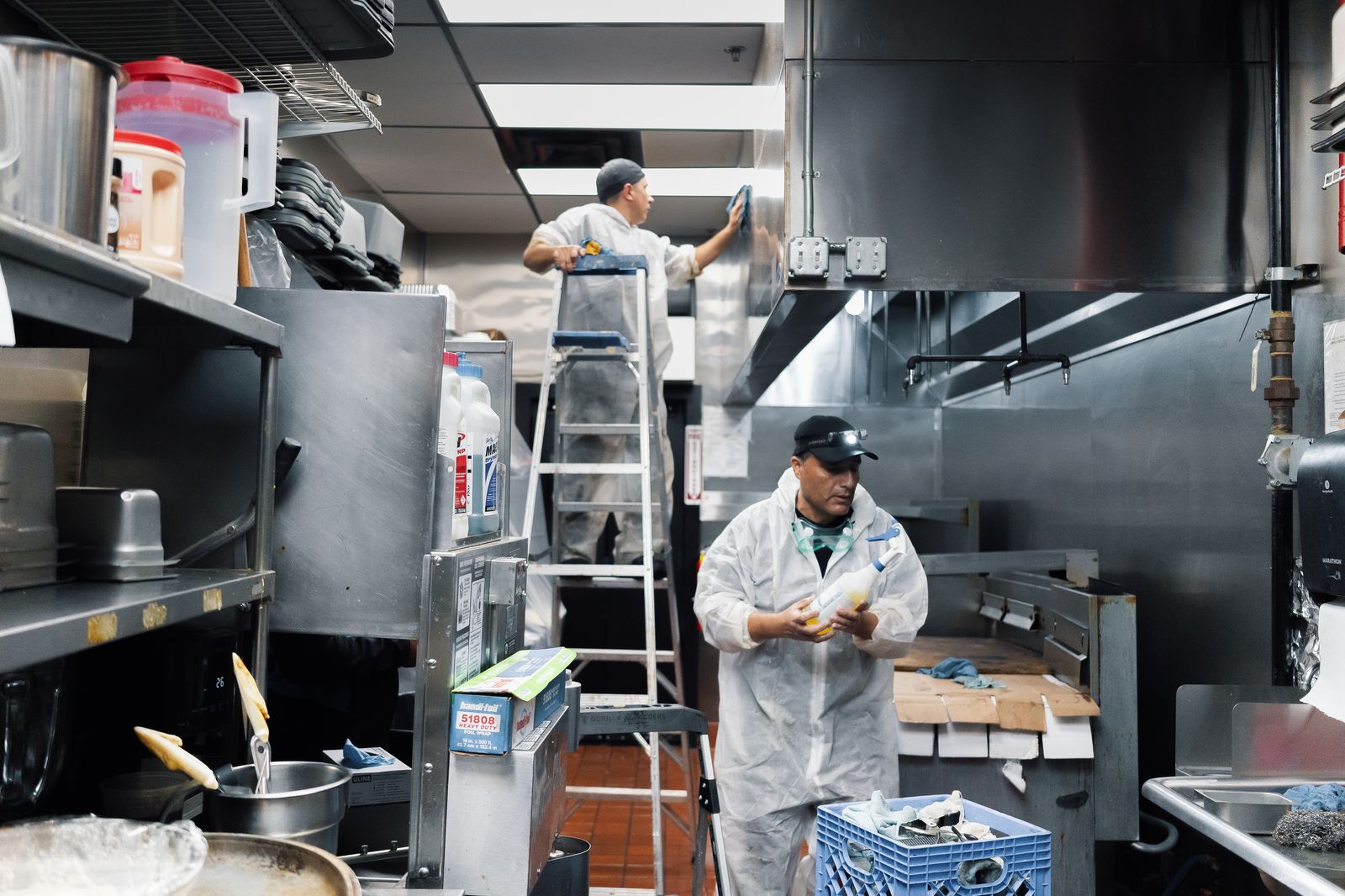
Real job photo of a rooftop exhaust fan housing on a commercial roof

NFPA 96 compliant ยท Atlanta, GA

Hood Cleaning and Kitchen Exhaust Cleaning in Atlanta, GA

Hood cleaning Atlanta GA and kitchen exhaust cleaning Atlanta GA are one visit from the Norcross shop. The crew cleans the hood, the filters, the ductwork, the access panels, and the rooftop exhaust fan, then leaves before and after photos, a post-service report, and a certificate sticker.

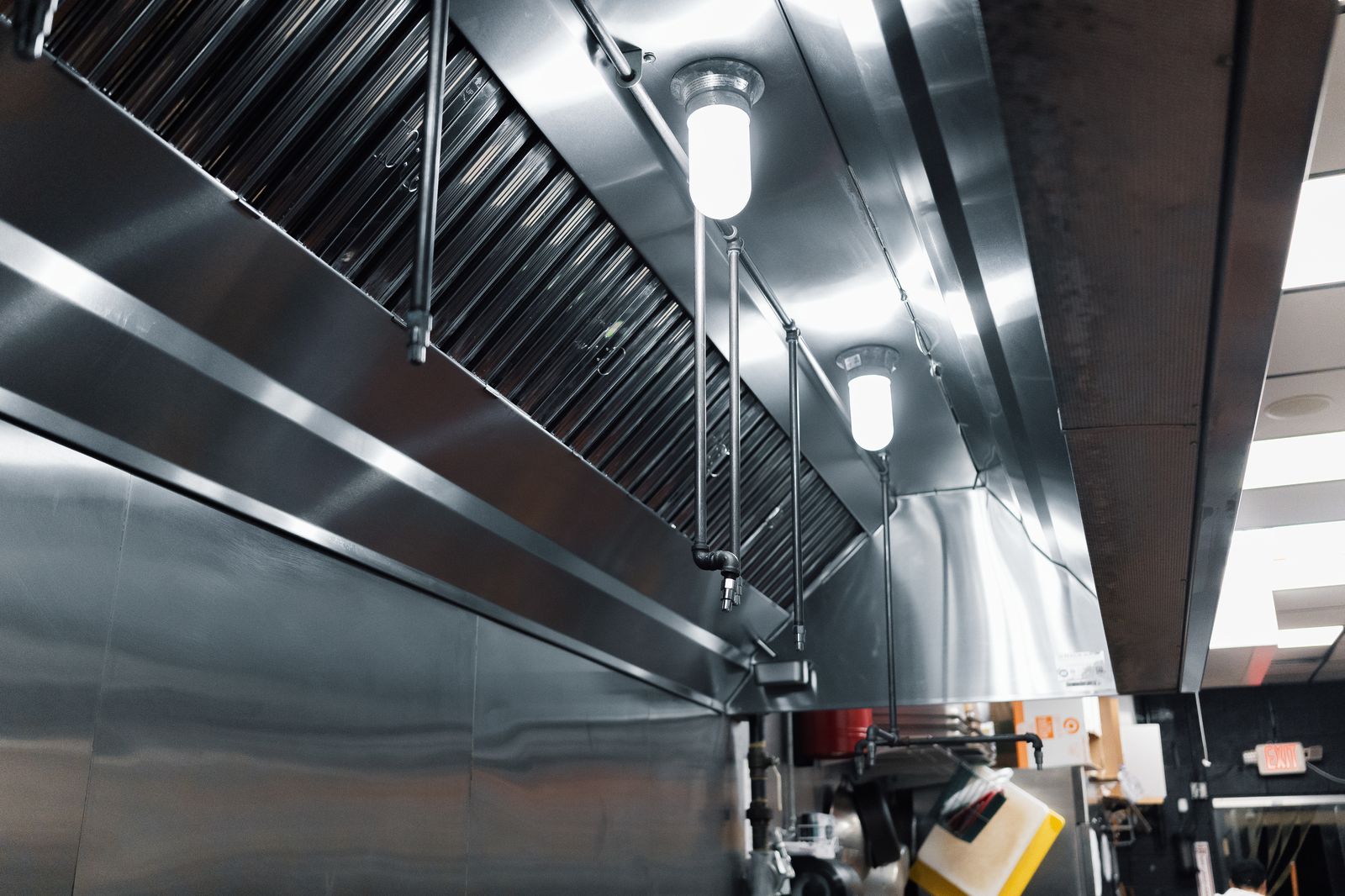
Real job photo of a commercial hood and baffle filters after cleaning
After the hood

A clean canopy is only the part a guest can see.

From the shop
NFPA 96 compliantNorcross, GAReport and stickerBefore and after photosSame business day
Atlanta kitchens

The hood changes with the building

Atlanta does not have one kind of kitchen exhaust. A Downtown or Midtown riser can climb several floors before it reaches a fan on a setback. A Buckhead dining room often runs a long canopy over several appliances, with the fan sitting among other rooftop equipment. West Midtown and the Upper Westside mix older industrial shells with newer low buildings, so the duct might be short and the roof walk might not be. The Old Fourth Ward, Inman Park, Cabbagetown, and Reynoldstown are full of one-story and two-story buildings where the curb is close to a neighbor and the ladder is the whole access plan.

Virginia-Highland, Poncey-Highland, Little Five Points, Candler Park, and Lake Claire put a lot of cooking into tight commercial streets. Grant Park, Summerhill, East Atlanta, Kirkwood, and Ormewood Park do the same on the east and southeast side. Edgewood and the streets around it stay open late. A lunch kitchen in Downtown and a late kitchen along Memorial Drive should not share a calendar just because both say Atlanta on the address.

South and west of downtown, the West End, Adair Park, Mechanicsville, Pittsburgh, Capitol View, and the close-in kitchens in East Point, College Park, and Hapeville are a different drive from Buckhead, and the roofs are often simpler pads. Ansley Park, Morningside, Piedmont Heights, Garden Hills, and the north end of Buckhead read more like longer hoods and shared roofs. Blandtown, Home Park, Loring Heights, and Underwood Hills sit between Midtown and the west side, with a mix of short ducts and screened fans.

Summer humidity keeps rooftop grease soft. A fan that looked acceptable in March can load up by July if the line is frying every night. The cleaning has to follow the metal in that building. The same crew cleans restaurants, hotel kitchens, school and campus kitchens, places of worship, and healthcare cafeterias. The building type does not pick the interval. The cooking volume does. TruShine Services works from 6500 McDonough Dr, Suite A-4, Norcross, GA 30093. Atlanta is a normal service day from that shop. Call (678) 751-8871 or email info@trushineservice.com and say which part of the city the kitchen sits in. We respond the same business day.

The standard

NFPA 96 compliant, and what that means here

The work is an NFPA 96 compliant cleaning of the exhaust path. NFPA 96 is the standard for ventilation control and fire protection of commercial cooking operations. It is the reason the hood, the filters, the duct, and the fan are cleaned on a schedule, and the reason the kitchen keeps a record. The cleaning is NFPA 96 compliant when the path that can be reached is actually cleaned and the record says what was done. This page does not call the company or the kitchen certified.

What an NFPA 96 compliant visit covers

Hood cleaning Atlanta GA and kitchen exhaust cleaning Atlanta GA are the same exhaust path on this visit. The scope is the metal grease travels through, not a wipe of the face of the canopy.

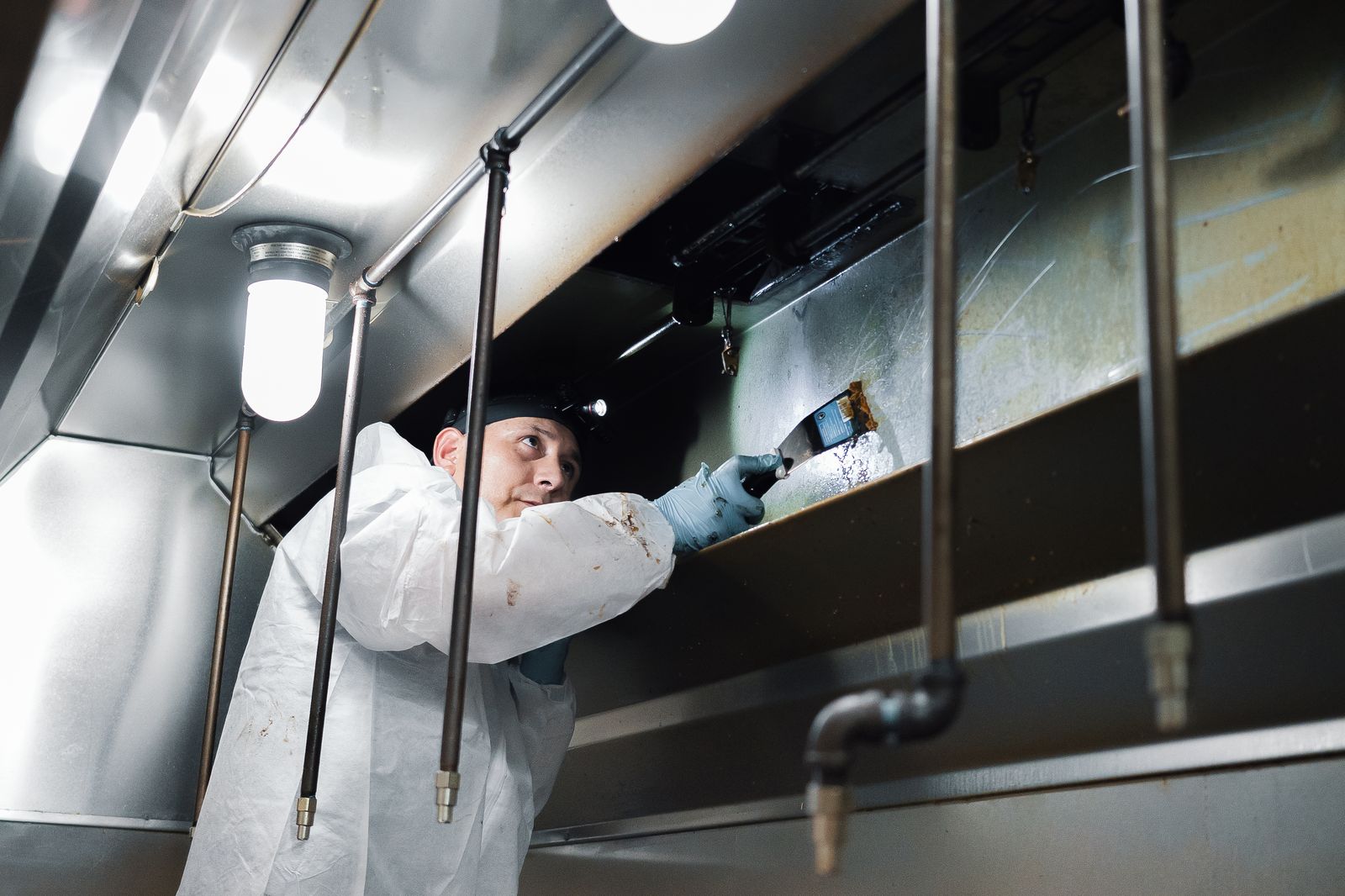
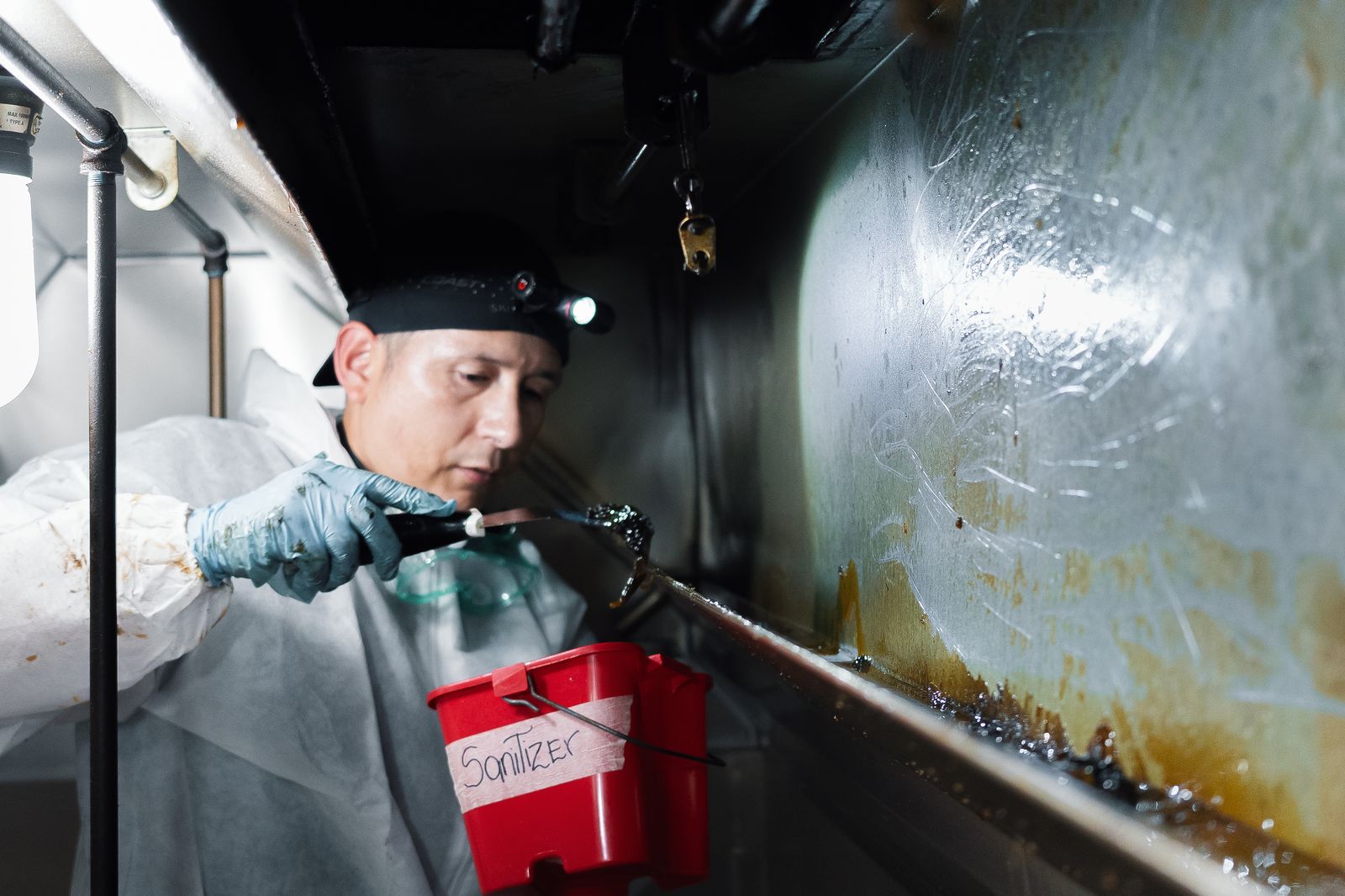
  • Hoods. The canopy shell, the plenum behind the filters, the grease troughs, and the grease cups are scraped and washed. Grease on the outside lip is part of the hood.
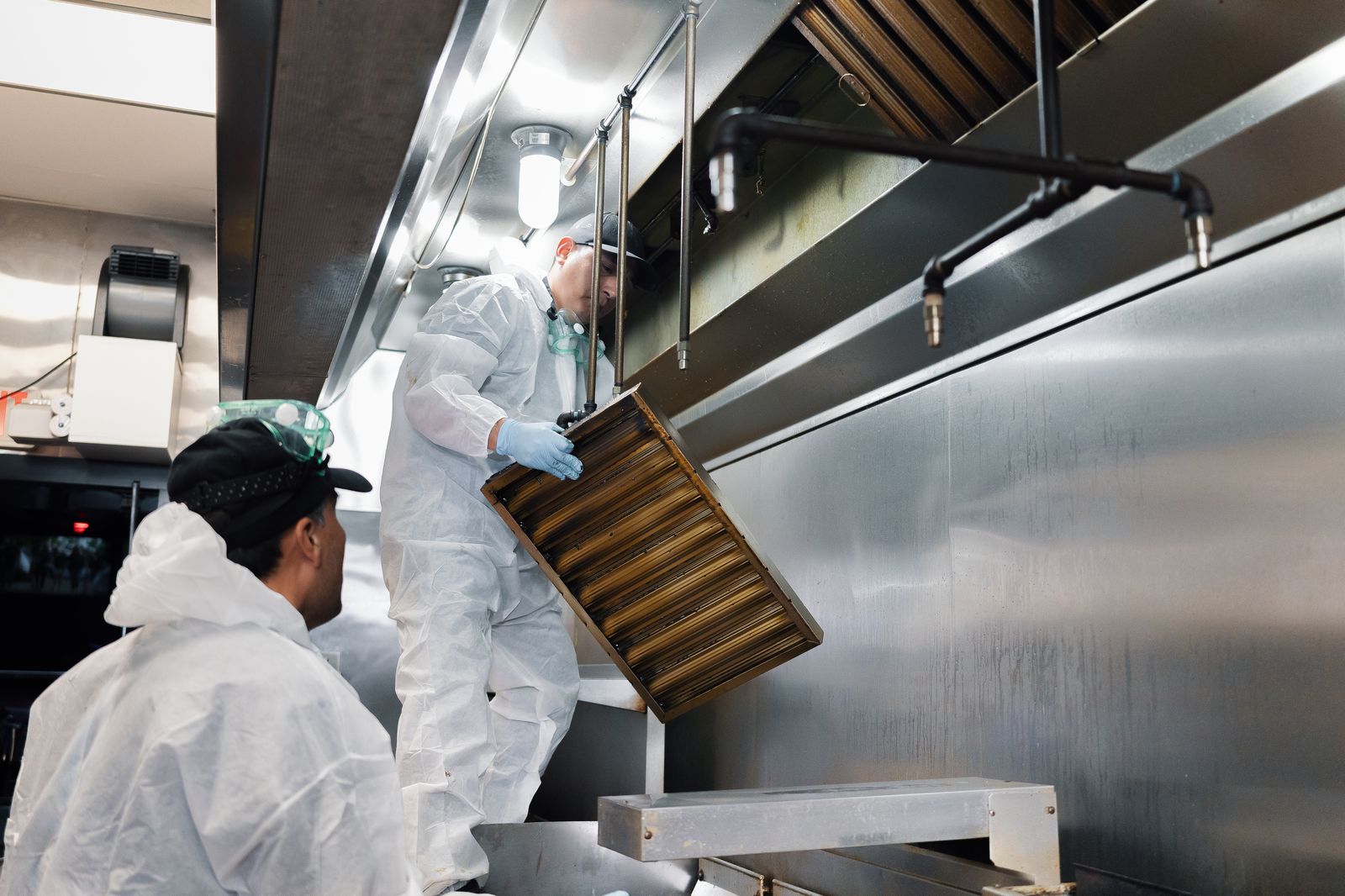
  • Filters. Baffle filters come out and get washed. Mesh filters, where a hood still has them, are called out because they hold grease instead of shedding it.
  • Ductwork. Horizontal runs and vertical risers are cleaned from the hood, from the access panels, and from the fan end when that end is open. A length with no opening is written as not entered.
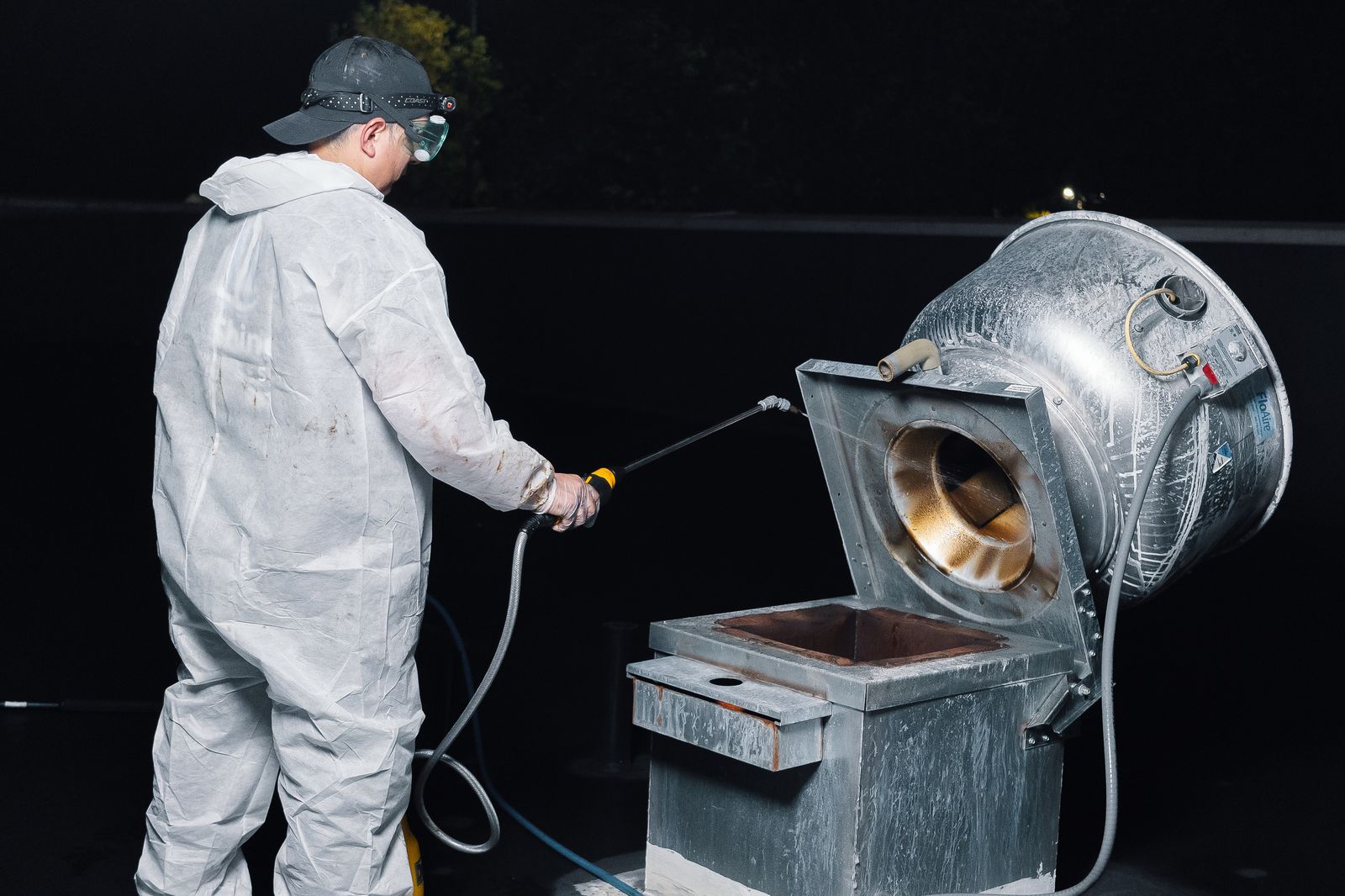
  • Rooftop exhaust fans. When the roof is safe to work, the fan is hinged and the wheel and housing are cleaned. A hinge that is seized is reported, not forced until something breaks.
  • Access panels. The crew opens the panels that exist and leaves them so they can be opened again. A missing or painted-shut panel is a limit on the report, not a section that was cleaned.
  • Before and after photo documentation. Photos of the hood, the opened duct access, and the fan stay with the post-service report. Three frames lower on this page are still waiting on real photos.
  • Certificate stickers. The sticker on the hood names TruShine Services and the service date. It is the cleaning record. It is not a suppression tag, and it is not a certification of the kitchen.

Inspection frequency by cooking volume

The interval follows cooking volume, not the ZIP code. The reading published on the NFPA 96 compliance page for Atlanta follows Georgia's fire prevention code Table 606.3.3.1 this way:

  • Solid fuel: every month.
  • High-volume cooking, including 24-hour cooking, charbroiling, or wok cooking: every 3 months.
  • Other cooking operations, including a typical restaurant line: every 6 months.
  • Low-volume cooking, such as places of worship, seasonal businesses, and senior centers: every 12 months.

Grease found on the hood, the filters, the duct, or the fan is cleaned even if a date on an old certificate sticker has not arrived. As published, that table is an inspection frequency. Cleaning follows when grease has accumulated. Most Atlanta restaurants that cook every day clean on that same rhythm so the inspection does not find a loaded duct.

Inside the city limits, the fire authority to ask is the Atlanta Fire Rescue Department. A health inspector is a separate visit and is looking at the kitchen around the hood, not writing the exhaust file. Decatur, Brookhaven, Sandy Springs, Dunwoody, Marietta, Roswell, Alpharetta, and the other cities below have their own fire authorities. The fire official at that address can shorten the interval. This page is a plain description of the standard, not a legal opinion, and it does not guess which edition a given station is carrying. Confirm the edition before you rely on a row.

Grease in the trap and oil in the fryer are different containers. Those jobs are on the grease trap page and the used cooking oil page. Nozzles, links, and cylinders over the line are suppression work, booked on their own. A longer note on the standard sits on the NFPA 96 compliance page for Atlanta.

The visit

The full pass, from inspection to the sticker

Every Atlanta hood cleaning follows the same sequence, whether the fan is on a Midtown setback or a one-story curb in East Atlanta. The building changes the access. It does not change the list.

Inspection

Before degreaser goes on anything, the crew looks at the hood, the filter bank, the plenum, the access panels, and the path to the rooftop exhaust fan. The note records how the kitchen cooks, whether the roof can be worked, and which panels actually open. A price is not a guess made from the street.

Hood

The canopy shell is scraped and washed, including the grease troughs and grease cups. Grease on the outside lip is part of the hood, not a separate favor. If the plenum behind the filters is loaded, that cavity is in the same pass. A wipe of the face of the hood is not written up as a finished hood.

Filters

Baffle filters come out and get washed. Mesh filters, where a hood still has them, are called out because they hold grease instead of shedding it. A filter wash by itself is not a full exhaust cleaning, and the report does not pretend that it is.

Degreasing

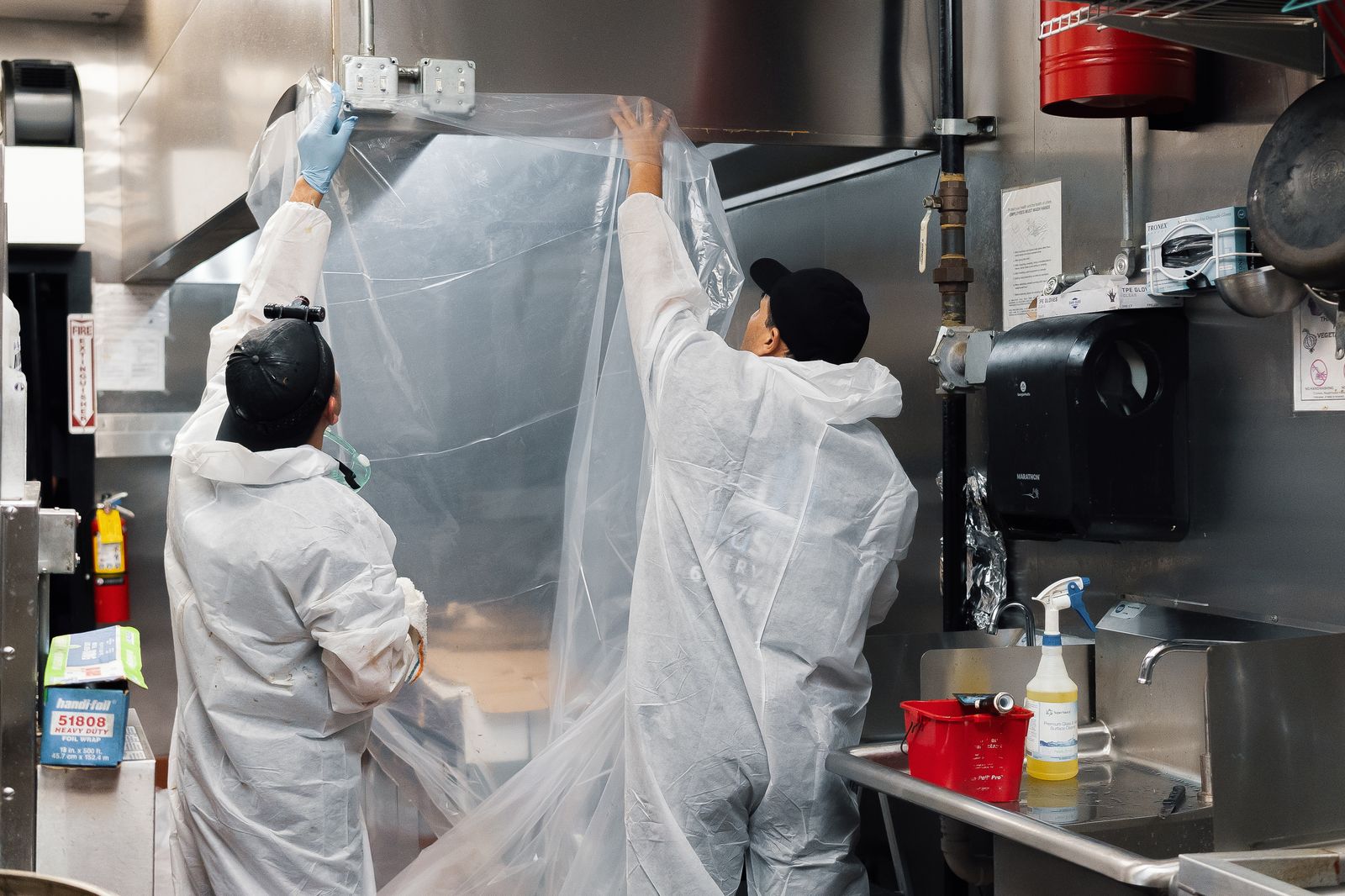
Degreasing is the chemical and hand work on the metal the crew can touch: hood, plenum, panel edges, fan housing, and the duct interior that was opened. The cookline is covered first. Cups and containers that belong to the hood are emptied. Surfaces that are not part of the exhaust path stay covered.

Access panels

Duct cleaning stops at openings that are really there. Older in-town risers sometimes have no safe panel, or a panel that has been sealed over. The crew opens the panels that exist and leaves them so they can be opened again. A missing panel is written as a limit, not as a section that was cleaned.

Ductwork

Horizontal runs over a Buckhead line and vertical risers in Downtown or Midtown are different jobs. The crew cleans the duct that can be reached from the hood, from the access panels, and from the fan end when that end is open. A length with no opening stays on the report as not entered.

Rooftop exhaust fan

When the roof is safe to work, the fan is hinged and the wheel and housing are cleaned. A hinge that is seized is reported, not forced until something breaks. A bright canopy with a still-loaded fan is an unfinished exhaust cleaning. Screen walls and setbacks can make the fan the long part of the night.

Post-service report and certificate sticker

The kitchen gets a certificate sticker and a written post-service report naming TruShine Services, the service date, and the parts actually opened. Before and after photos stay with that file. The certificate sticker is the hood record. It is not a suppression tag, it is not a certification of the kitchen, and it does not forecast the next inspection.

How the night runs

Assess, clean, then document

The three steps are the same in Castleberry Hill and in a Lawrenceville pad. The file should read the same way even when the roofs do not.

Assess

Before a price is set, we need the address, the hood count, how the kitchen cooks, and how the roof is reached. A tower near Downtown or Midtown often means a building engineer and a freight elevator. A Virginia-Highland or Grant Park roof may mean a ladder and a short curb. A Sandy Springs or Alpharetta pad is often a walkable curb with a longer canopy. Say if one store charbroils and another only reheats. Those two should not share a calendar.

Service

The crew degreases the hood, washes the filters, cleans the plenum, opens the access panels that exist, cleans the ductwork those openings reach, and hinges the rooftop exhaust fan if the roof can be worked. Hours follow the kitchen. Downtown and Midtown lunch lines often need the crew out before morning prep. East Atlanta, Edgewood, and West Midtown often need the crew in after a late close. Someone on site still has to be able to shut the appliances down.

Document

The certificate sticker and the post-service report name TruShine Services, carry the service date, and list the hood, filters, access panels, ductwork, and fan. A section that could not be reached is marked that way. Before and after photos from the visit sit in the same file. The file is what a manager can hand over when the question is whether the exhaust was cleaned. It is not a health score, and it is not a certification of the kitchen.

Photo proof

Real job photos, and the frames still open

The photos below are real job photos already in TruShine's files. They show a hood interior before degreasing, a hood after cleaning, filters coming out, the line covered before degreasing, a duct run, a greasy fan wheel, a rooftop exhaust fan housing, and a ladder to a roof curb. They are not labeled with an address, so this page does not present them as one Atlanta kitchen or as a matched pair from a single night. Slots that still need a real photo say so in the caption.

Real job photo of a commercial hood interior with heavy grease before degreasing
Before: hood interior, as found on a real job. The file is not labeled with a city or a business name.
Real job photo of baffle filters and a hood canopy after cleaning
After: hood and baffle filters. Real job photo. Not claimed as the same kitchen as the before frame.
Real job photo of baffle filters being lifted out of a commercial hood
Filters: baffle filters coming out for washing. Real job photo.
Real job photo of cooking equipment covered before hood degreasing
Degreasing prep: the cookline covered before the hood is washed. Real job photo.
Real job photo of a horizontal commercial kitchen exhaust duct
Ductwork: a horizontal exhaust duct on a real job. The file does not say whether this frame is before or after cleaning.
After: ductwork at the access panel. A real photo is needed.
Real job photo of a rooftop exhaust fan wheel with grease buildup
Before: rooftop exhaust fan wheel with grease on it. Real job photo.
After: rooftop exhaust fan, wheel and housing. A real photo is needed.
Real job photo of a rooftop exhaust fan housing on a commercial roof
Rooftop exhaust fan housing on a real job. This frame is the fan on the roof, not a cleaned wheel.
Real job photo of a ladder set to a rooftop exhaust fan curb
Roof access: a ladder to a fan curb on a real job. Access is part of whether the fan gets cleaned.
After: access panel interior. A real photo is needed.
Neighborhoods

Where the Atlanta day actually goes

Listing a neighborhood means the drive and the roof type are familiar. It does not mean a job on every corner.

Downtown, Midtown, Buckhead

Downtown and Midtown exhaust often climbs inside the building before it reaches a fan on a high roof or a setback. Getting there can mean a building engineer and a freight elevator, and the cooking clock is often lunch plus a banquet or late service. Buckhead hoods tend to be longer, with the fan sitting in a cluster of other rooftop units. One crew can clean all three and still owe three different notes.

West Midtown and the close west side

West Midtown, Blandtown, Home Park, Loring Heights, and Underwood Hills mix warehouse shells and newer buildings. Some ducts are short. Some fans sit behind a screen. Castleberry Hill is tighter still, with roofs that do not behave like a retail pad. The West End, Adair Park, Mechanicsville, and Pittsburgh are a south and southwest run, often with simpler curbs and a different close time than Buckhead.

Old Fourth Ward to East Atlanta

The Old Fourth Ward, Inman Park, Cabbagetown, Reynoldstown, Edgewood, and Little Five Points are older commercial streets. Virginia-Highland, Poncey-Highland, Candler Park, and Lake Claire are the same problem in a different grid: short ducts, tight ladders, late closes. Grant Park, Summerhill, East Atlanta, Kirkwood, East Lake, and Ormewood Park continue that pattern south and east. If a panel is not there, the report says the duct section was not entered.

Northside neighborhoods

Ansley Park, Morningside, Piedmont Heights, Garden Hills, Peachtree Hills, and North Buckhead are closer to longer canopies and shared roofs than to a storefront riser. Lindbergh sits on the way between Midtown and Buckhead, with a mix of both. Easier parking is not a reason to skip the fan. The report still names whether the hinge opened.

Within a 3-hour drive

Metro cities, scheduled from Norcross

The shop is in Norcross, at 6500 McDonough Dr, Suite A-4. The Atlanta page covers the city and the metro around it, plus other kitchens within a 3-hour drive of that shop. A city on this list is a place the crew can be scheduled. It is not a claim that every kitchen there is already on a route.

Atlanta neighborhoods and nearby cities served

Neighborhoods in the city include Downtown, Midtown, Buckhead, West Midtown, the Old Fourth Ward, Inman Park, Virginia-Highland, Grant Park, East Atlanta, Kirkwood, Summerhill, and the West End. Downtown, Midtown, and Buckhead are on this page and on the Atlanta city page. Nearby cities on a normal day from Norcross are linked where a city page already exists. Doraville and Dunwoody have hood pages and no separate city hub.

Close to the shop, on the northeast side of the metro: Norcross, Peachtree Corners, Duluth, Suwanee, Buford, Lawrenceville, Lilburn, Snellville, Tucker, Stone Mountain, Clarkston, Chamblee, and Doraville. Brookhaven, Dunwoody, and Sandy Springs sit between Norcross and Buckhead. Those drives are ordinary, not a special trip.

North Fulton is Roswell, Alpharetta, Johns Creek, and Milton. Cobb is Marietta, Smyrna, Vinings, Kennesaw, Acworth, Austell, Mableton, and Powder Springs. DeKalb besides the cities already named includes Decatur. South of the city, East Point, College Park, and Hapeville are close-in. Each of those cities has its own fire authority. Several already have their own hood pages, including Marietta, Roswell, Alpharetta, Sandy Springs, Decatur, Duluth, Lawrenceville, Kennesaw, Smyrna, and Norcross.

Farther out, still within a 3-hour drive of Norcross, the same shop reaches Chattanooga and Hixson, the Birmingham area (including Hoover, Homewood, Vestavia Hills, Mountain Brook, Trussville, Pelham, and Alabaster), and the Greenville area (including Greer, Mauldin, Simpsonville, Taylors, Anderson, and Spartanburg). Those are separate fire authorities, and several have their own pages, starting with Chattanooga, Birmingham, and Greenville. Name the city when you call. Charlotte is outside that 3-hour drive and is scheduled from the Winston-Salem office, not from this page.
Questions

Atlanta hood cleaning questions

What does NFPA 96 compliant hood cleaning include in Atlanta?

An inspection of the exhaust path, then cleaning of the hood, the filters, the ductwork that can be opened, the access panels that exist, and the rooftop exhaust fan when the roof can be worked. Degreasing is part of that cleaning. You leave with a post-service report and a certificate sticker. That package is NFPA 96 compliant. It is not a suppression tag.

How often should an Atlanta kitchen have the hood cleaned?

Inspection frequency follows cooking volume. Solid fuel is every month. High-volume cooking, including 24-hour cooking, charbroiling, or wok cooking, is every 3 months. Other cooking operations are every 6 months. Low-volume cooking, such as places of worship, seasonal businesses, and senior centers, is every 12 months. Grease on the hood, filters, duct, or fan is cleaned even if an old certificate sticker date has not arrived. Atlanta Fire Rescue, or the fire authority in the next city over, can shorten the clock. Confirm the code edition before you rely on a row.

Who is the fire authority in Atlanta, and who is it outside the city?

Inside the city limits, start with the Atlanta Fire Rescue Department. Decatur, Brookhaven, Sandy Springs, Marietta, Roswell, and the other cities on this page govern themselves. A health inspection is a different visit. Name the city when you book so the report is not written as if one fire marshal covers the whole metro.

Does this visit replace the suppression inspection?

No. This visit removes grease from the hood, filters, ductwork, and rooftop exhaust fan. The wet chemical system over the cookline is a different appointment, with a different tag. Cleaning the hood leaves that tag where it was.

Can you clean hoods in older in-town buildings?

Yes, with the access the building actually has. Virginia-Highland, the Old Fourth Ward, Grant Park, Cabbagetown, and East Atlanta storefronts often have short ducts, tight ladders, and access panels that are missing or painted shut. If a section cannot be opened safely, the post-service report says so.

Which neighborhoods and nearby cities are served from Norcross?

Atlanta neighborhoods on this page include Downtown, Midtown, Buckhead, West Midtown, the Old Fourth Ward, Inman Park, Virginia-Highland, Grant Park, East Atlanta, Kirkwood, Summerhill, and the West End. The metro cities include Decatur, Brookhaven, Sandy Springs, Dunwoody, Marietta, Smyrna, Roswell, Alpharetta, Johns Creek, Duluth, Lawrenceville, and the cities along I-85 northeast of the shop. The same Norcross crew also reaches kitchens within a 3-hour drive, including Chattanooga, the Birmingham area, and the Greenville area. Call (678) 751-8871 and name the city.

What is on the post-service report and certificate sticker?

The certificate sticker on the hood and the written report name TruShine Services and the service date. The report lists the hood, filters, access panels, ductwork, and rooftop exhaust fan, and it marks anything that could not be reached. Before and after photos stay with that file. The certificate sticker is not a suppression tag, it is not a certification of the kitchen, and it does not predict an inspection result.

What does kitchen exhaust cleaning Atlanta GA include?

Kitchen exhaust cleaning Atlanta GA is the ductwork, the access panels, and the rooftop exhaust fan, cleaned with the hood and the filters on the same visit. Hood cleaning Atlanta GA is the name most kitchens use for that whole job. A filter wash by itself is not kitchen exhaust cleaning. If a duct section or the fan cannot be opened, the post-service report says so.

Which Atlanta kitchens is this visit for?

Commercial cooking lines in the service area on this page: restaurants, hotel kitchens, school and campus kitchens, places of worship, and healthcare cafeterias. The interval follows the cooking volume, not the type of building. Call (678) 751-8871 and name the city.

Will hood cleaning shut the restaurant for the whole day?

No. The appliances have to be off while the hood is degreased, and the crew schedules around that window. Downtown and Midtown lunch lines often need the work finished before morning prep. East Atlanta, Edgewood, and West Midtown often need a start after a late close. Call (678) 751-8871 to set the time. We respond the same business day.

What do you need before the job is priced?

The address, the hood count, how the kitchen cooks, and how the roof is reached. Solid fuel, a charbroiler, a wok, or a line that stays open around the clock is a different scope than a low-volume kitchen. This page does not publish a flat price. Call (678) 751-8871 or use the form. We respond the same business day.

Where is the shop, and how fast do you respond?

TruShine Services is at 6500 McDonough Dr, Suite A-4, Norcross, GA 30093. The Atlanta phone is (678) 751-8871 and the email is info@trushineservice.com. We respond the same business day.

Related pages

Nearby services and cities

Request service

Book hood cleaning in Atlanta

Tell us the neighborhood, how many hoods you have, and whether you cook with solid fuel, a charbroiler, or a wok. We respond the same business day.

Call (678) 751-8871 or send the form. TruShine Services, LLC is at 6500 McDonough Dr, Suite A-4, Norcross, GA 30093.

Request Your Free Assessment

Takes 30 seconds. We respond the same business day.

Call Now Free Assessment