Caddy or tank
Kitchen caddies for smaller fryer counts. Outdoor tanks where the volume justifies one. We look at what you have before we describe a route.
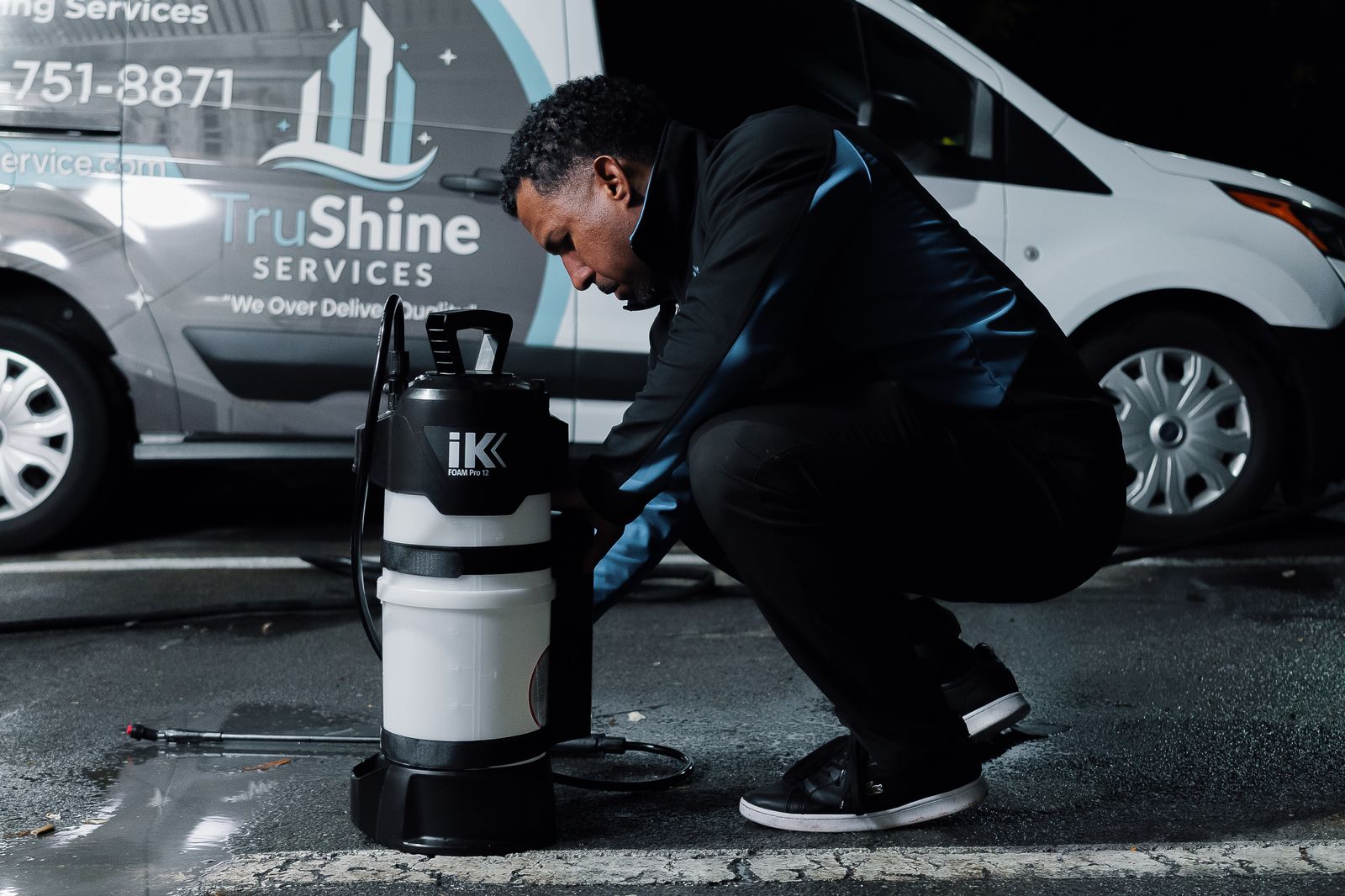
Atlanta, GA · fryer oil, not trap waste
Fryer oil is not trap grease and it is not hood grease. In Atlanta it is a stored liquid that should leave in a caddy or a tank, get recycled, and never be poured down a floor drain or into the interceptor to save a trip.
The fryer has its own waste stream.
The restaurants that search this term are usually staring at a full caddy, not at a fire sticker. West Midtown, Buckhead, and the corridors that fry all afternoon produce a steady stream of spent oil. Downtown alleys are a worse place to store it: shared space, a storm drain nearby, and a landlord who notices a sheen before the city does. East side kitchens often have the opposite problem, a small caddy in a tiny prep room that overflows because pickup was planned for a busier store.
None of that is solved by the hood crew on the roof or by the trap pump in the parking lot, unless someone deliberately combines the stops. Combining the stops is fine. Combining the waste is not. Oil in the trap ruins the point of the interceptor. Oil in the duct is a different accident entirely.
The hard local rule is the sewer one. The Department of Watershed Management grease program tells food businesses to keep fats, oils, and grease out of the collection system, and the city says those discharges are a major cause of blockages and overflows. Pouring fryer oil down a drain fights that program directly. Storage leaks that reach a storm drain are an additional mess, on the street rather than in the sanitary sewer.
There is no Atlanta ordinance that sets your pickup every seven days, pays you by the gallon, or requires a particular tank brand. Those are contract terms. The used cooking oil service page is where the company describes collection and recycling, including monitoring where it is part of the setup. Ask whether monitoring fits your tank. Do not assume it is on every Atlanta stop.
If the interceptor is the thing that is full, go to grease trap cleaning in Atlanta. If the fan is the thing that is overdue, go to hood cleaning. Oil pickup does not close either of those files.
Kitchen caddies for smaller fryer counts. Outdoor tanks where the volume justifies one. We look at what you have before we describe a route.
Lids on, away from floor drains and storm drains, in a spot the driver can reach without crossing the dining room at noon.
The oil leaves the kitchen for recycling rather than for the sewer. We do not describe a resale price on this page.
Date and that a pickup happened, so a manager can show the oil is not being dumped. Bring any manifest your hauler or your landlord already requires.
Dinner fryers and tighter back-of-house storage. Outdoor tanks need a path that is not the guest door.
Shared alleys. Storm drains at the curb. Keep the caddy inside until the driver is there.
Old Fourth Ward, East Atlanta, and Grant Park. Smaller volumes, easier to overflow a single caddy if pickup is copied from a busier store.
Decatur and Brookhaven on many of the same days. North Fulton and Cobb if you tell us those stores are part of the same oil program.
Spent oil leaves on a schedule that matches your fryers, instead of sitting until someone pours it out. The sewer and the trap are protected from a waste they were not built to take in bulk. You get a pickup you can point to. You do not get a published rebate, a named refinery, or a sensor on the tank unless that was actually scoped.
Call (678) 751-8871 or use the form. The company name on the invoice is TruShine Services, LLC, Norcross.
Trap waste is the wastewater sludge pumped from an interceptor. Used cooking oil is the oil rotated out of a fryer. They are stored apart, hauled apart, and counted apart. Dumping fryer oil into the trap to empty a caddy is a good way to overload the interceptor and annoy the Atlanta grease program.
Atlanta's Watershed Management program exists because fats, oils, and grease clog the sewer. A floor drain in the kitchen is on that system. A storm drain in the alley is a separate problem: oil there is an outdoor spill, not a sanitary-sewer question. Keep containers closed and off both.
TruShine collects the oil and sends it into a recycling stream, which is the service described on the company's used-oil page. This page does not name a plant, promise a payment per gallon, or claim a monitor on every tank. Ask what the current pickup includes for your volume.
It follows how hard the fryers run. A Buckhead or West Midtown kitchen with a full fryer bank is not on the same week as a cafe with one fryer. There is no city ordinance on this page that sets a universal oil-pickup day. The FOG permit cares that the oil is not in the sewer. Your fryer care cares that the oil is not sitting rancid in an open caddy.
Yes for collection routing from the Norcross shop: in-town Atlanta, and often Decatur and Brookhaven on the same day. Marietta, Roswell, and Alpharetta can be added. Say so when you call, because a single Atlanta caddy does not describe a five-store fryer program.
TruShine Services, LLC, 6500 McDonough Dr, Suite A-4, Norcross, GA 30093, (678) 751-8871, info@trushineservice.com.
Oil, trap, and hood are three containers. These links keep them apart.
Tell us how many fryers you run and whether the oil sits in a kitchen caddy or an outdoor tank. We will match the pickup to that volume instead of quoting a citywide schedule.
Call (678) 751-8871 or send the form. TruShine Services, LLC is at 6500 McDonough Dr, Suite A-4, Norcross, GA 30093.
Takes 30 seconds. We respond the same business day.