Hood, filters, and plenum
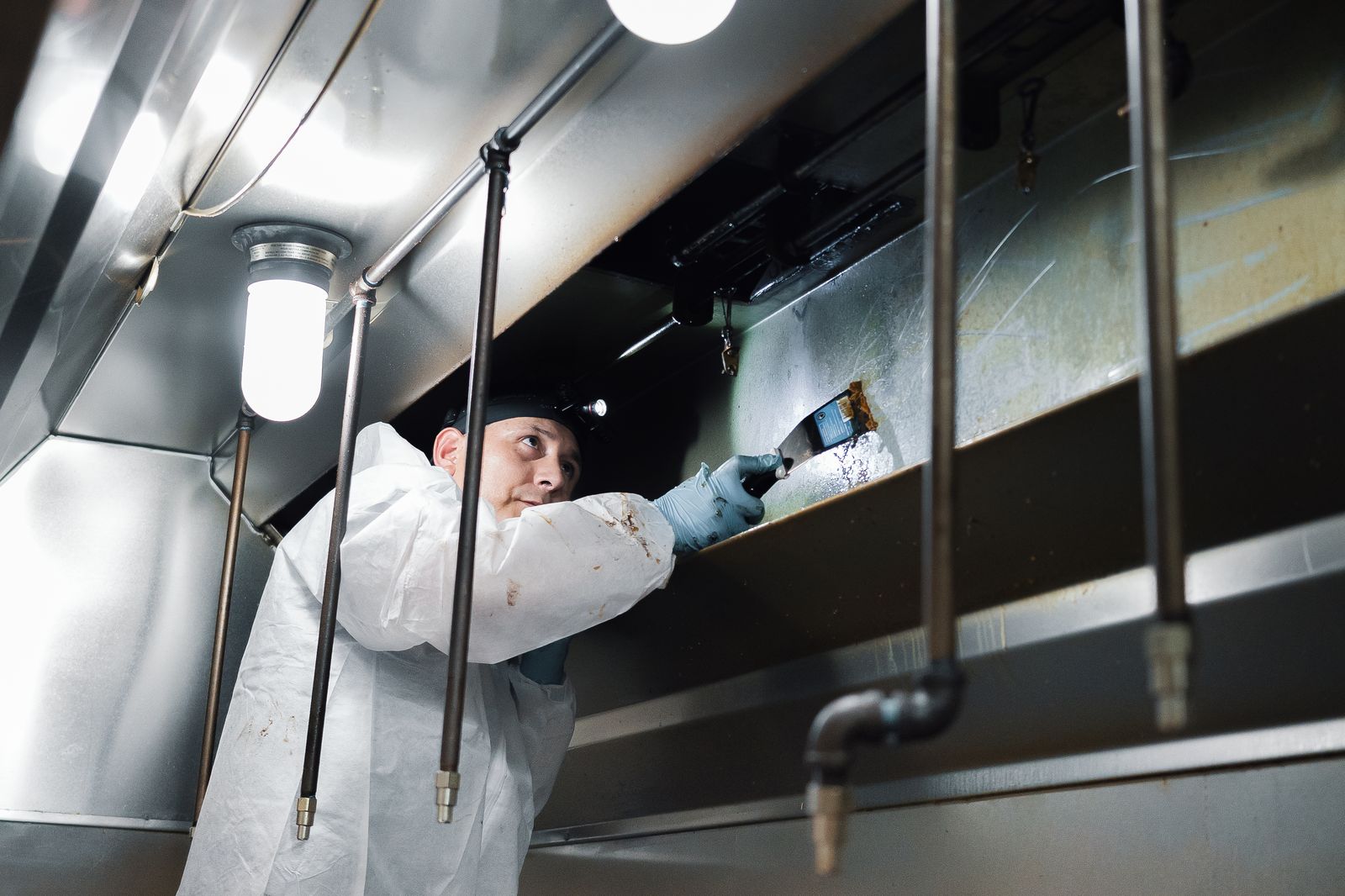
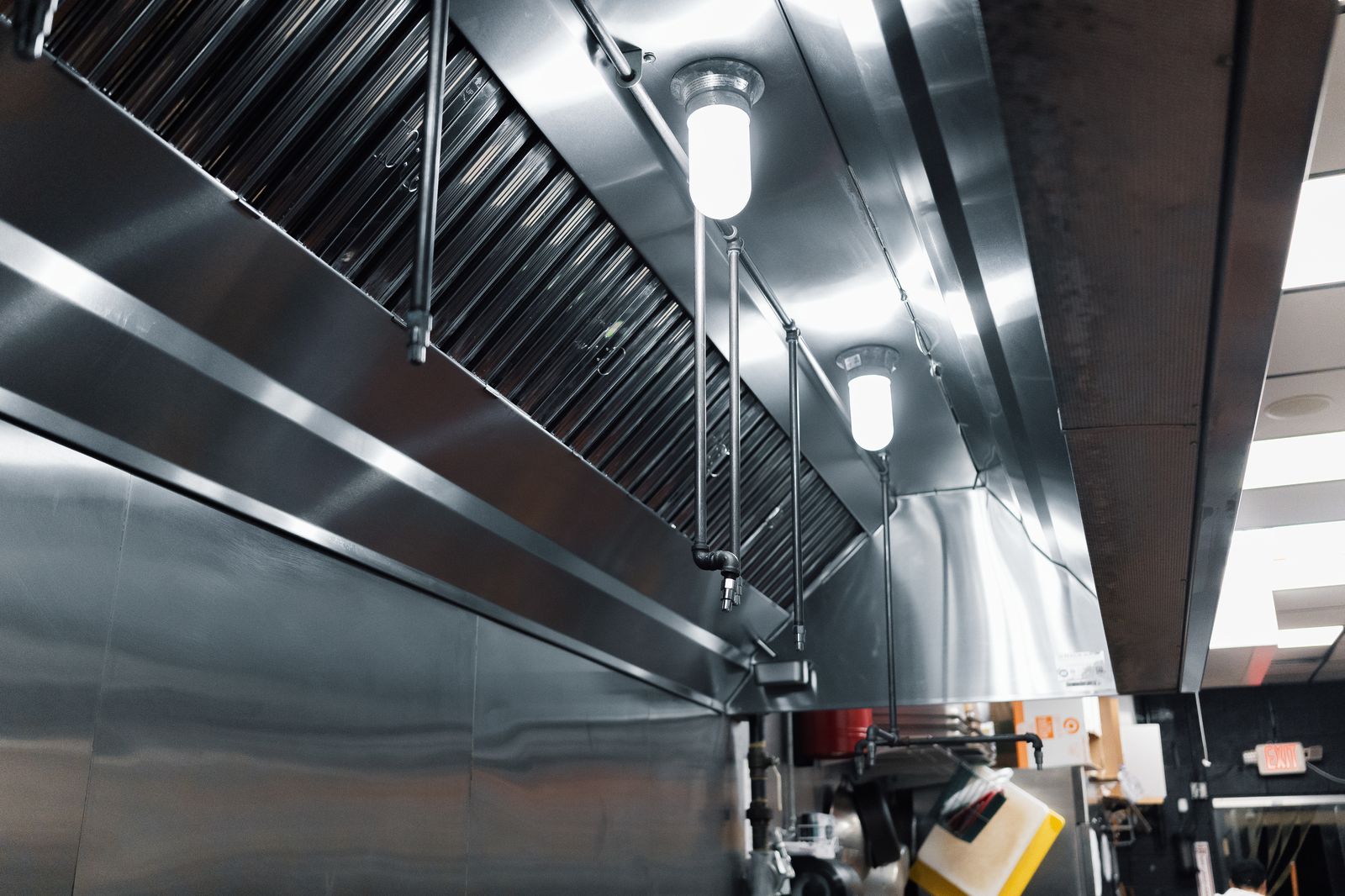
Filters come out and get washed. The canopy shell, grease troughs, and the plenum behind the filters are scraped and degreased. A wipe of the face of the hood is not a finished exhaust cleaning.
Hood cleaning in Chattanooga, TN and kitchen exhaust cleaning are one visit from the Norcross shop. The crew cleans the hood, the filters, the ductwork, the access panels, and the rooftop exhaust fan, then leaves before and after photos and a certificate sticker.
Chattanooga kitchens sit in different buildings. Downtown and the Southside often mean a fan on a city roof, with a short or a long riser depending on the block. The North Shore is a different drive from Brainerd and East Brainerd, where hoods are more often on one-story pads. St. Elmo and Highland Park are closer in, with tighter access than a retail curb.
A lunch kitchen downtown and a late kitchen on the Southside should not share a calendar just because both say Chattanooga on the address. The cleaning follows the metal in that building. The same crew cleans restaurants, hotel kitchens, school and campus kitchens, places of worship, and healthcare cafeterias. The building type does not pick the interval. The cooking volume does.
The work is an NFPA 96 compliant cleaning of the exhaust path. NFPA 96 is the standard for ventilation control and fire protection of commercial cooking operations. The cleaning is NFPA 96 compliant when the path that can be reached is actually cleaned and the record says what was done. This page does not call the company or the kitchen certified.
Grease in the trap and oil in the fryer are different jobs. Those sit on the grease trap page and the used cooking oil page. Nozzles and links over the line are suppression work, booked on their own. The city overview is commercial kitchen services in Chattanooga.
TruShine Services works from 6500 McDonough Dr, Suite A-4, Norcross, GA 30093. Chattanooga is a normal service drive from that shop. Call (678) 751-8871 or email tn@trushineservice.com and say which part of the city the kitchen sits in. We respond the same business day.
Filters come out and get washed. The canopy shell, grease troughs, and the plenum behind the filters are scraped and degreased. A wipe of the face of the hood is not a finished exhaust cleaning.
Duct cleaning stops at openings that are really there. The crew opens the panels that exist and leaves them so they can be opened again. A missing or painted-shut panel is a limit on the report, not a section that was cleaned.
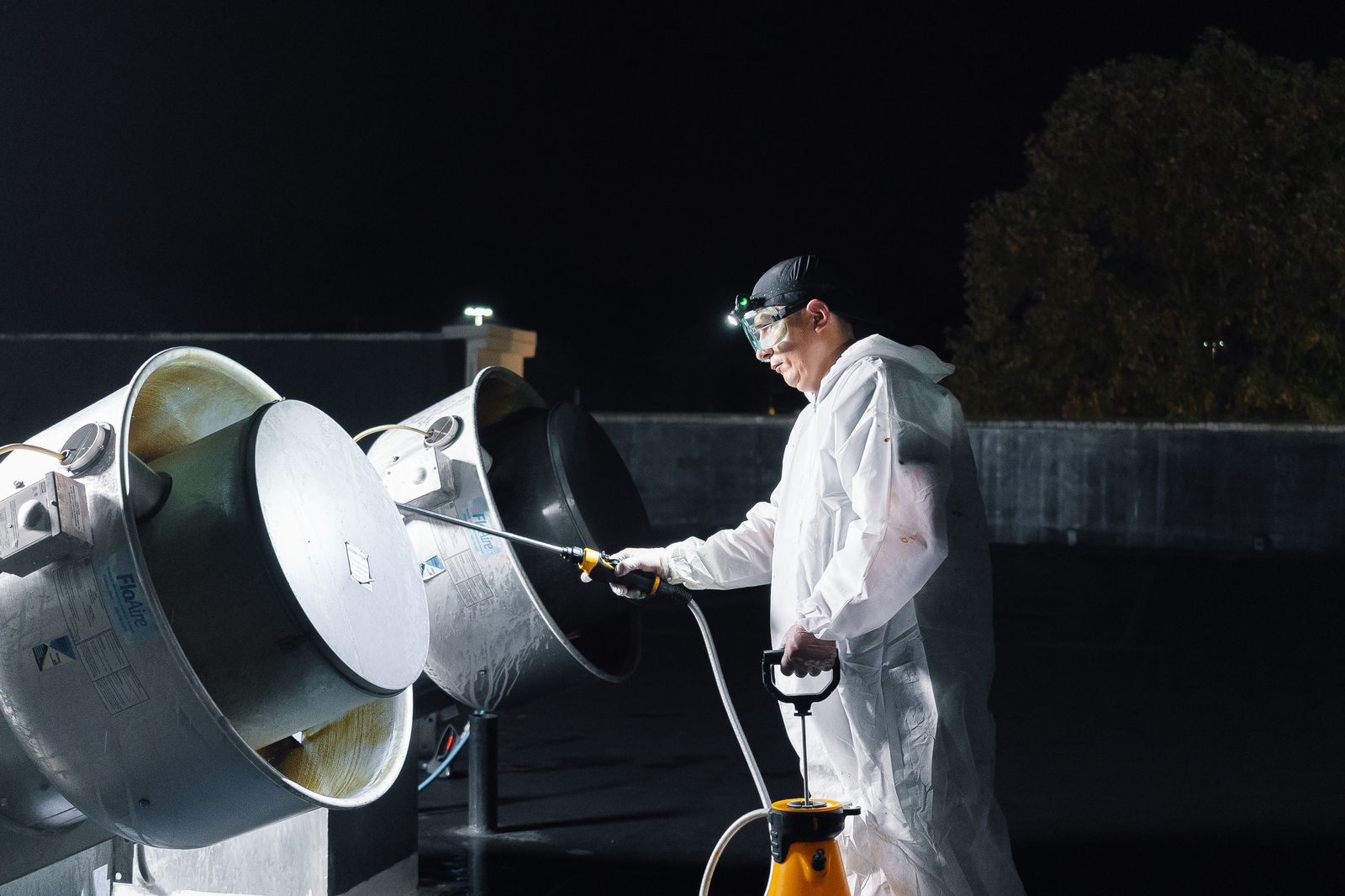
When the roof is safe to work, the fan is hinged and the wheel and housing are cleaned. A hinge that is seized is reported, not forced until something breaks. A bright canopy with a still-loaded fan is an unfinished job.
The sticker on the hood names TruShine Services and the service date. The written report lists what was opened and what could not be reached. The sticker is not a suppression tag, and it is not a certification of the kitchen.
Same three steps on every hood. The building changes the access. It does not change the list.
Before a price is set, we need the address, the hood count, how the kitchen cooks, and how the roof is reached. A downtown roof may mean a building engineer. A North Shore or St. Elmo roof may mean a ladder and a short curb. A Brainerd pad is often a walkable curb. This page does not publish a flat price.
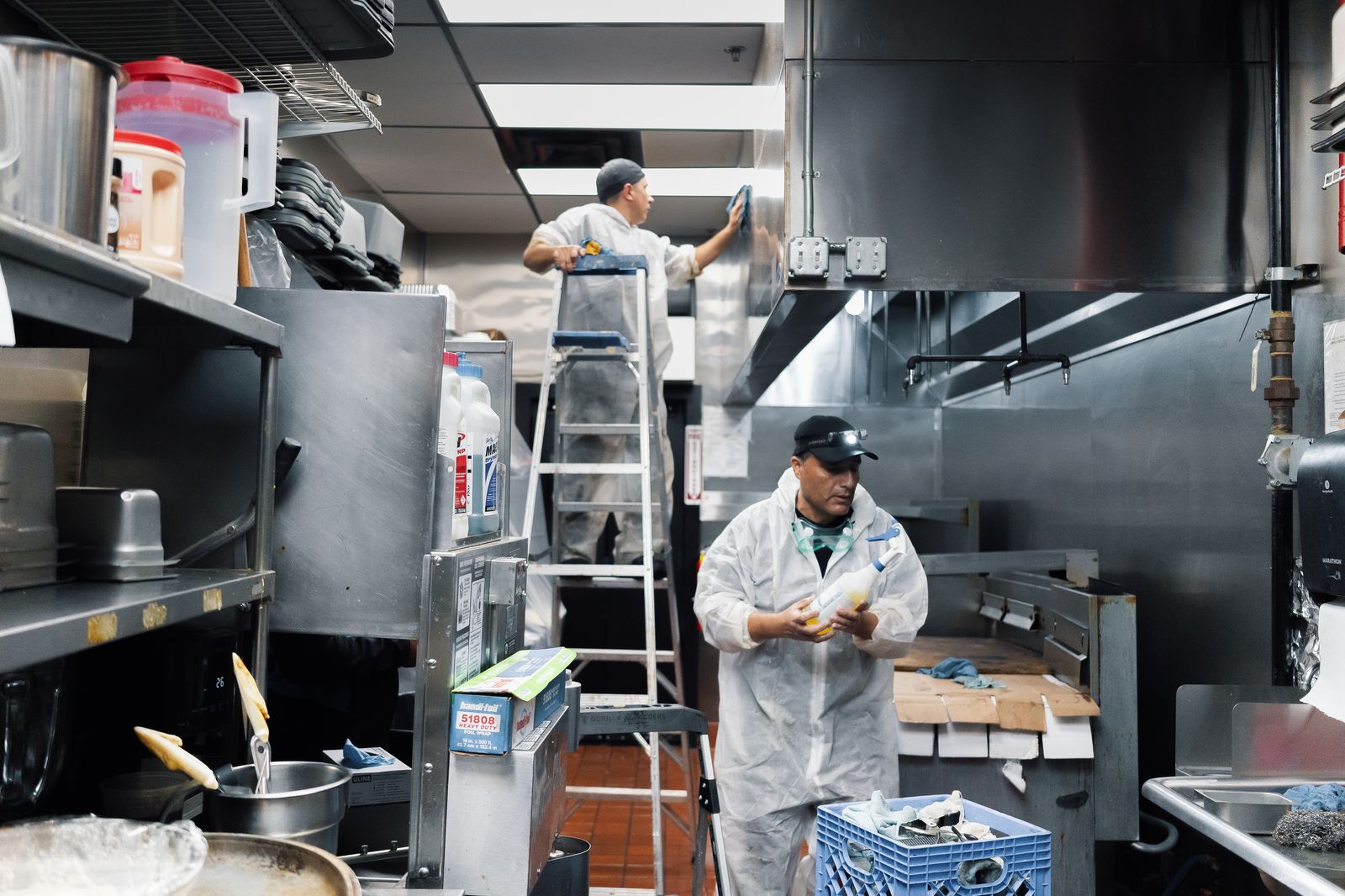
The crew degreases the hood, washes the filters, cleans the plenum, opens the access panels that exist, cleans the duct those openings reach, and hinges the rooftop exhaust fan if the roof can be worked. The cookline is covered first. Hours follow the kitchen. Someone on site still has to be able to shut the appliances down.
The certificate sticker and the post-service report name TruShine Services, carry the service date, and list the parts that were actually opened. Before and after photos sit in the same file. The file is what a manager can hand over when the question is whether the exhaust was cleaned.
The photos below are real job photos already in TruShine's files. They are not labeled with a Chattanooga address, and they are not a matched pair from one kitchen. After a visit, the report for that address still carries the frames from that night.
Hixson, East Ridge, Red Bank, Signal Mountain, and Soddy-Daisy are the nearby communities already listed for this service area. Hixson has its own hood page. East Ridge, Red Bank, Signal Mountain, and Soddy-Daisy do not, so name the city when you book. Each one has its own fire authority. Inside Chattanooga city limits, start with the Chattanooga Fire Department.
Knoxville, Nashville, and Atlanta have their own pages. Those are separate fire authorities. Name the city when you call.
Downtown and the Southside exhaust can climb before it reaches the fan. The North Shore is a separate run along the river. One crew can clean all three and still owe three different notes about roof access.
Closer-in streets with shorter ducts and tighter ladders than a retail pad. If a panel is not there, the report says the duct section was not entered.
These areas are closer to one-story pads and longer canopies. Easier parking is not a reason to skip the fan. The report still names whether the hinge opened.
Hixson has a hood page. The others are named here because they are the surrounding communities already on the Chattanooga service area, and they do not have their own pages yet. The fire authority is not automatically Chattanooga's.
An inspection of the exhaust path, then cleaning of the hood, the filters, the ductwork that can be opened, the access panels that exist, and the rooftop exhaust fan when the roof can be worked. You leave with a post-service report and a certificate sticker. That package is NFPA 96 compliant. It is not a suppression tag.
NFPA 96 ties the clock to the cooking, not to the ZIP code. Kitchens burning solid fuel are on the short interval, often every month. Lines that charbroil, run a wok, or stay open around the clock are often on a three month interval. A typical restaurant line is often every six months. Seasonal and low volume cooking is often once a year. Grease on the hood, filters, duct, or fan is the reason to clean, and the fire authority at that address can shorten the clock.
Inside Chattanooga city limits, start with the Chattanooga Fire Department. Hixson, East Ridge, Red Bank, Signal Mountain, and Soddy-Daisy govern themselves. A health inspection is a different visit. Name the city when you book.
No. This visit removes grease from the hood, filters, ductwork, and rooftop exhaust fan. The wet chemical system over the cookline is a different appointment, with a different tag. Cleaning the hood leaves that tag where it was.
Neighborhoods and districts on this page include Downtown, the Southside, the North Shore, St. Elmo, Highland Park, Brainerd, and East Brainerd. Nearby communities include Hixson, East Ridge, Red Bank, Signal Mountain, and Soddy-Daisy. Hixson has its own hood page. Knoxville, Nashville, and Atlanta have their own pages. Call (678) 751-8871 and name the city.
TruShine Services is at 6500 McDonough Dr, Suite A-4, Norcross, GA 30093. The phone is (678) 751-8871 and the email is tn@trushineservice.com. We respond the same business day. Chattanooga is scheduled from that Norcross shop.
Free assessment. Flat quote. We respond the same business day. Service typically within 48–72 hours.
Takes 30 seconds. We respond the same business day. No obligation.